
I don’t normally write about international trade or tariffs. I make guitars, but with the latest Canadian tariff news, I thought it was worth looking at what buying a British guitar in Canada actually involves. There are plenty of people far better qualified to talk about economics than I am.
But over the last couple of years I have been watching what has been happening between Canada and the United States with interest. More recently, the latest round of Canadian counter-tariffs got me thinking about something much closer to home: where our guitars come from, who makes them, and why we tend to buy the brands we do.
From 8 September 2026, Canada is introducing another round of tariffs on selected products originating in the United States, in response to tariffs imposed on Canadian goods. The new measures range from 15% to 50% depending on the product.
Before I go any further, I should make one thing clear.
Electric guitars themselves are not currently included in that new list of Canadian counter-tariffs.
So this isn’t an article suggesting that your next American guitar is suddenly going to cost 25% more at the border. It isn’t.
For me, the interesting bit is what is happening around the tariffs.
Looking at where things come from
Canada and the United States have obviously traded with each other for a very long time. Geography alone means that makes perfect sense.
As a result, American guitar brands have an enormous presence in Canada. Fender, Gibson, PRS and others are familiar, readily available and, in many cases, make fantastic guitars.
I own plenty of them myself.
But the ongoing trade disagreement seems to be making more Canadian consumers stop and look at where the things they buy actually come from.
Research from the Bank of Canada has found that Canadian consumers continue to favour Canadian-made products and expect to spend less on products made in the United States. Most respondents also expect that change in buying behaviour to continue over the longer term, regardless of what eventually happens with the trade relationship.
That is the bit I find interesting.
Because once you start looking beyond the familiar American names, there is a much bigger world of guitar making out there.
Including here in Britain.
Britain still makes some very good things

I have always had a soft spot for British manufacturing.
Maybe that comes from growing up around people who made things. Some of the tools we still use in our workshop have been passed down through three generations of my family.
When we started Munson Guitars, we made a conscious decision that we wanted to build as much of the guitar here as reasonably possible.
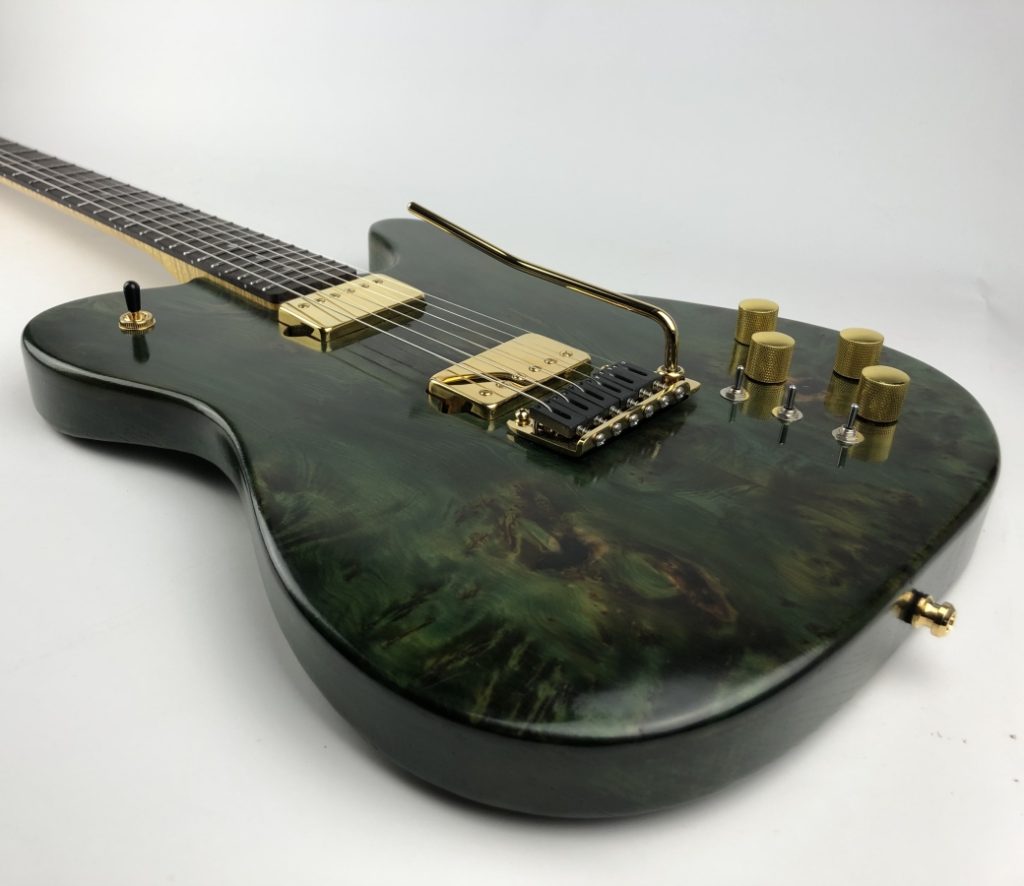
We use English and European timbers wherever we can. We work with British pickup manufacturers. We use Rotosound strings. Our guitars are designed and built in our workshop in Britain, one at a time.
Not because putting a Union Jack on something automatically makes it better.
It doesn’t.
We do it because we like knowing where things come from and we like working with other small companies and craftspeople who care about what they make.
There is something very satisfying about turning a piece of English ash, oak, cherry or yew into an instrument that will hopefully still be played many years after I have finished working on it.
A different way of buying a guitar
There is also another difference between buying a guitar from a large international manufacturer and commissioning one from a small builder.
With us, you are not choosing guitar number 287 from a production run.
How do you play?
What guitars do you already own?
What do you like about them?
More importantly, what don’t you like about them?
What sort of neck feels right?
Do you want something lightweight? A particular pickup combination? Different switching? A specific balance when standing? Something visually understated, or something completely individual?
Those conversations then become the guitar.
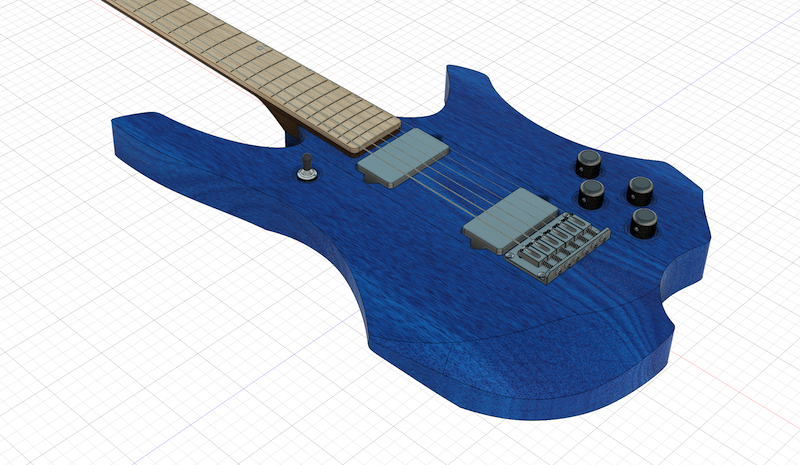
We use 3D CAD as part of the design process, choose the timber for the individual instrument and build it around the person who commissioned it.
Every Munson is therefore slightly different because every player is slightly different.
For someone who simply wants a Strat, Tele or Les Paul exactly as they already know it, there are some extremely good manufacturers doing precisely that.
I am not really interested in trying to beat Fender at making a Fender.
What interests me is the player who says:
“I like this, but I wish…”
That is usually where the interesting guitars begin.
Buying a British guitar in Canada: what does it cost?
Qualifying British-made electric guitars can currently enter Canada with no customs duty under the UK preferential tariff, although Canadian sales taxes and courier or customs-clearance charges may still be payable.
Canada’s normal Most-Favoured-Nation duty rate for electric guitars is currently 6%. However, under tariff item 9207.90.90.10, qualifying UK-origin guitars are listed under the UK Tariff as Free. CBSA 2026 Customs Tariff – Chapter 92
That distinction matters.
It doesn’t mean buying a guitar from Britain comes with no additional costs.
Most imported goods entering Canada are still subject to GST and, depending on the province, PST or HST. A courier or customs broker may also charge a separate fee for handling the customs-clearance process. Those fees are separate from the actual customs duty.
Those are things I think a manufacturer should be open about.
Nobody wants to order an expensive guitar and then discover a cost they weren’t expecting when it arrives at their door.
But importantly, a qualifying British-made guitar isn’t automatically disadvantaged simply because it has travelled across the Atlantic.
And at a time when more people in Canada appear to be considering where the products they buy come from, perhaps it makes sense to widen the search.
Import information correct at September 2026. Tariffs and taxes can change, so it is always worth checking the current Canadian rules before ordering.
Do the new Canadian tariffs apply to electric guitars?
At the time of writing, electric guitars are not included in Canada’s new September 2026 counter-tariffs on selected US-origin goods.
So this is not a case of American guitars suddenly becoming subject to an additional 25% guitar tariff.
What has changed is the wider conversation about where products come from.
Canadian consumers have increasingly been looking at alternatives to US-made goods, and that creates an interesting opportunity to look beyond the brands and countries we automatically turn to.
For guitar players, that might mean looking at Canadian builders.
It might mean looking at British builders.
Or it might simply mean discovering something you hadn’t considered before.
You don’t have to buy what everyone else buys
Guitar players can be surprisingly conservative.
We spend years experimenting with amps, pedals, pickups and strings, but when it comes to the instrument itself many of us keep coming back to designs created in America in the 1950s.
There is nothing wrong with that. They became classics for good reason.
But they are not the only answer.
There are brilliant independent guitar makers in Canada, Britain, Europe and elsewhere, each approaching the instrument slightly differently.
If the current trade situation encourages a few Canadian guitar players to look beyond the obvious choices, I actually think that could be quite healthy for guitar making in general.
You might discover a local Canadian builder you had never heard of.
You might discover a small workshop in Britain.
You might end up with something completely different.
And, ultimately, I think that is much more interesting than everybody playing the same guitars.
Could your next guitar come from Britain?
We have built Munson Guitars around the idea that a guitar should belong to the person who plays it.
One guitar. One owner. One build.
We only make a small number each year, because that is the only way we can work directly with each player and give every instrument the attention it needs.
So if you are in Canada and have started looking a little further afield for your next guitar, have a look at what the smaller British builders are doing.
And if what we do at Munson strikes a chord, get in touch.
You don’t need to arrive with a specification sheet or know exactly what you want.
That’s what the first conversation is for.
And one other thing…
If you already own the guitar you love, we also make the HANGAR® in our workshop.
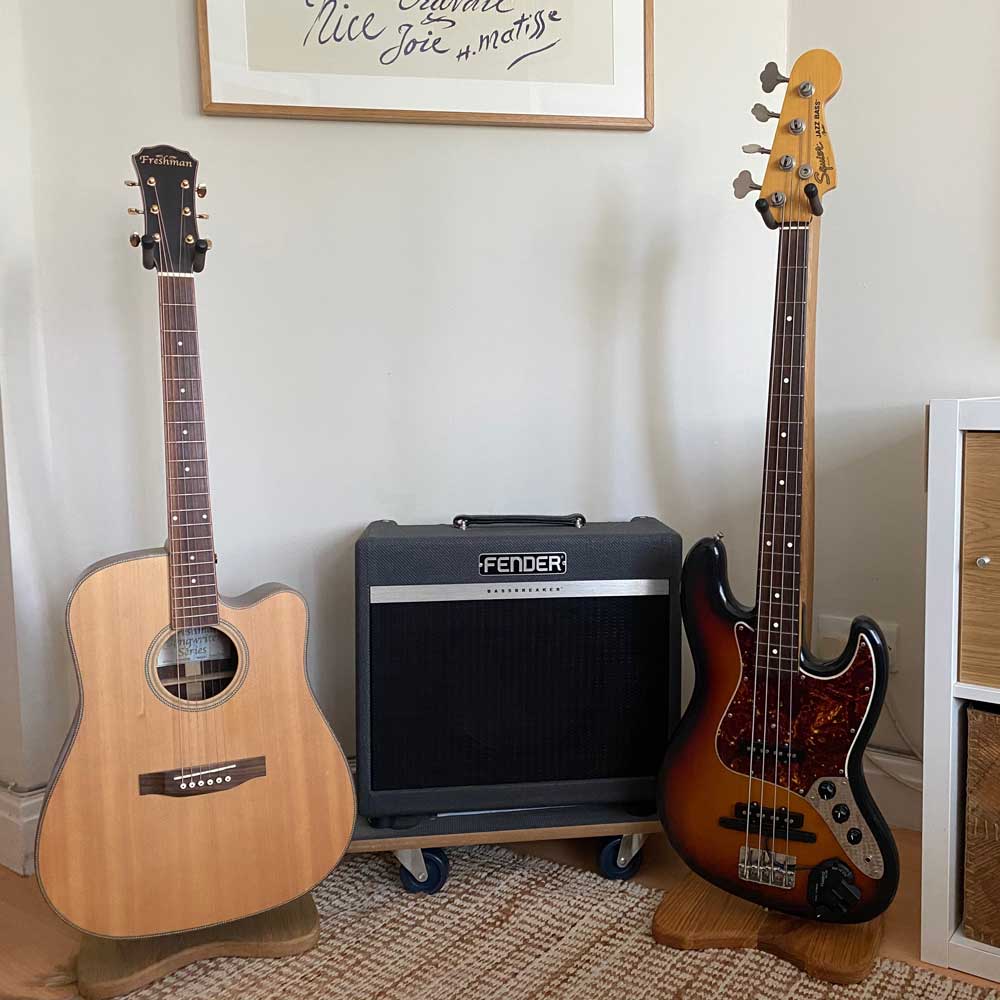
It came about for a fairly simple reason: after spending months making a beautiful guitar, I never particularly liked putting it onto a generic metal stand.
So we made something we felt suited the instruments we were building.
But that is probably a story for another article.